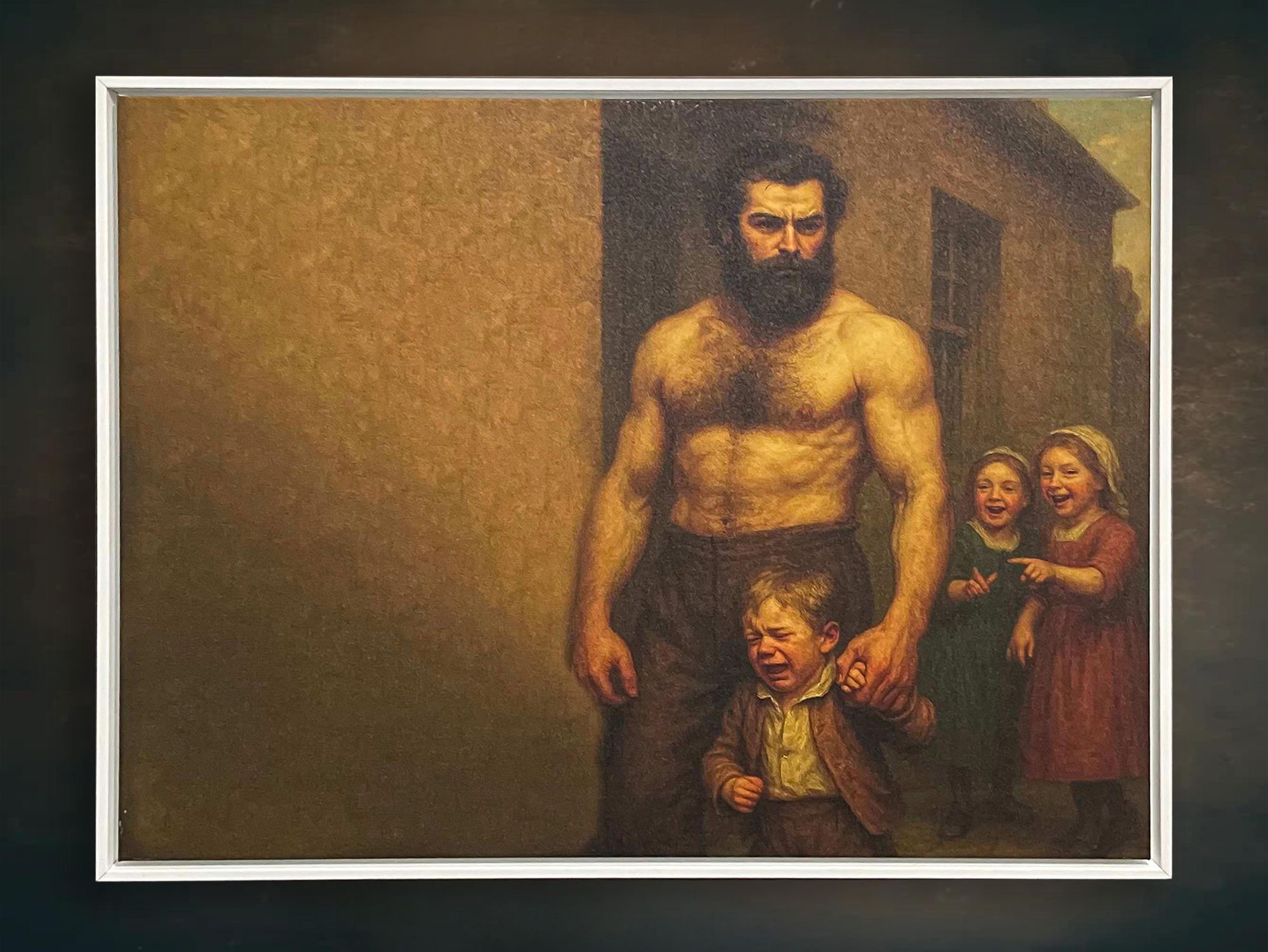
Abstract art decorates a wall. A figure occupies it. The moment a room contains a depicted figure — mid-thought, mid-grief, mid-silence — the space stops being empty and starts feeling inhabited. That is the quiet power of moody figurative art.
What is moody figurative art?
Moody figurative art is representational art of people and scenes rendered in low, dramatic light and a restrained, emotional palette. It descends from the old masters — chiaroscuro, deep shadow, a single light source — but trades grandeur for intimacy: ordinary people in private, often melancholy moments.
Why does a single figure anchor a room so well?
Because the eye is wired to find faces and bodies first. A lone figure gives a wall a focal point and a psychological centre of gravity — you read the posture, the gaze, the mood before anything else. One quiet figure does more for a room than a cluster of decorative prints competing for attention.
How do you choose a figurative print that lasts?
Choose feeling over flash. A piece you can sit with — that reveals a little more on the tenth look — outlasts anything merely pretty. The Strong Man’s Silence, with its deliberate full-and-empty composition, is built to be lived with rather than glanced at. Browse more in Moody Figurative & Portraits.
Where should you hang a figurative portrait?
Give it a wall of its own, at eye level, with warm light nearby. Figures want a little space and stillness around them; crowding a portrait with other frames breaks the spell. In a study, bedroom, or hallway, a single moody figure sets the tone for everything around it.
If a single figure can make you pause on the way past, it has already earned its place on the wall.